In sequence: identifier block (employee details, PAYE reference, tax code), gross pay, statutory deductions (PAYE, NI, pension, student loan), year-to-date cumulatives, then net pay. Section 8 of the Employment Rights Act 1996 makes the itemised statement a statutory right; missing any required field is challengeable at an employment tribunal.
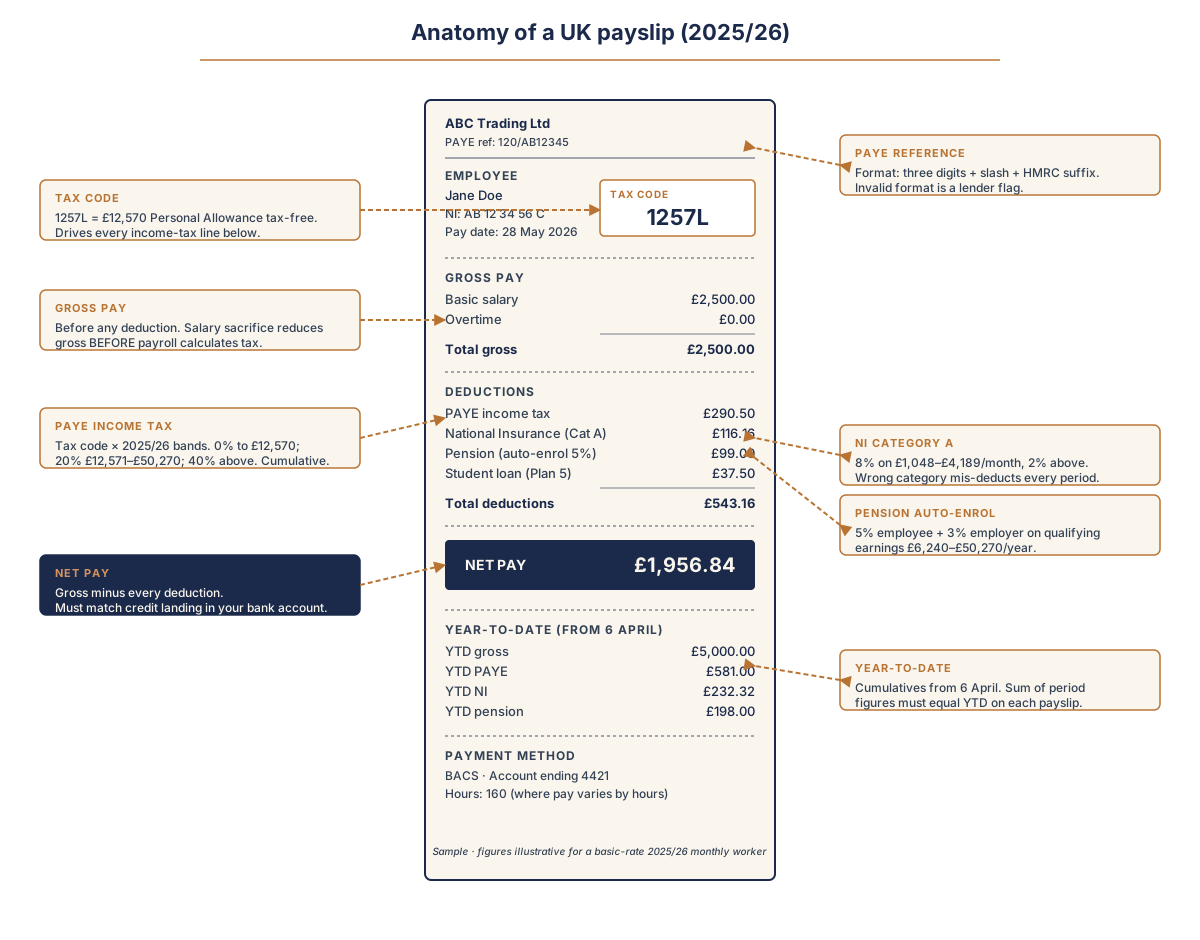
What must a UK payslip show by law?
Gross earnings, every variable deduction (PAYE income tax, which moves pay-period to pay-period), every fixed deduction (typically pension), net pay, the method of payment, and the number of hours worked where pay varies by hours. Section 8 of the ERA 1996 was extended to cover workers (not just employees) in April 2019, bringing roughly 1.2 million zero-hours and agency staff into scope.
Which 2025/26 rates and thresholds apply?
PAYE income tax in England, Wales, and Northern Ireland: 0% on the first £12,570, 20% on £12,571–£50,270, 40% on £50,271–£125,140, 45% above. Scottish taxpayers use Holyrood bands (starter, basic, intermediate, higher, advanced, top). National Insurance Category A: 8% on £1,048–£4,189/month, 2% above. Pension auto-enrolment minimum: 5% employee plus 3% employer on qualifying earnings £6,240–£50,270/year. Student loan Plan 5: 9% above £25,000/year; other plans use different thresholds. The seven red flags article covers what lenders catch when these figures do not add up.
In 6 steps
How to Read a UK Payslip
Work through a UK payslip in the order the figures fit together: identifiers and tax code first, then gross pay, then each statutory deduction, then year-to-date cumulatives, and finally the net pay against the bank credit.
- 1
Locate the identifier block
Find your name, National Insurance number, payroll or employee number, the employer name, the PAYE reference, the pay date, and the tax code. The PAYE reference follows the format three digits, a slash, then a suffix issued by HMRC. The tax code drives every income-tax figure below.
- 2
Read the gross pay section
Gross pay sums basic salary, overtime, bonus, allowances, and any taxable benefits. Salary sacrifice for pension or childcare reduces the gross before payroll calculates tax. Confirm the gross matches your contract and the hours shown, where pay varies by hours.
- 3
Check the PAYE income tax deduction
Apply the 2025/26 bands to the gross above your Personal Allowance: 20% on £12,571–£50,270, 40% on £50,271–£125,140, 45% above £125,140. Scottish taxpayers use Holyrood bands. PAYE is cumulative across the tax year, so the figure smooths out earnings spikes.
- 4
Verify the National Insurance category and contribution
Category A is the default. Category M applies to under-21s, Category H to apprentices under 25, Category C to employees over State Pension age. For 2025/26 Category A pays 8% between the Primary Threshold and Upper Earnings Limit, then 2% above. A wrong category over- or under-deducts every pay period until corrected.
- 5
Confirm pension and student-loan deductions
Auto-enrolment minimums for 2025/26 are 5% employee on qualifying earnings between £6,240 and £50,270. Student-loan deductions depend on the plan: 9% above the Plan 1, 2, 4, or 5 threshold, 6% above the Postgraduate threshold. Both can stack.
- 6
Reconcile year-to-date cumulatives and net pay
Year-to-date figures should equal the sum of period figures across every payslip from 6 April. Net pay must equal gross minus every deduction shown. The net figure must also match the credit landing in your bank account on payday, within a small tolerance for split payments or sacrificed benefits.
Primary sources
- Employment Rights Act 1996, Section 8 — legislation.gov.uk — Statutory right to an itemised pay statement
- Income Tax rates and Personal Allowances — gov.uk — 2025/26 PAYE bands and Personal Allowance
- National Insurance rates and categories — gov.uk — 2025/26 employee and employer NI thresholds
- Workplace pensions — what employers need to know — gov.uk — Auto-enrolment minimum contributions and qualifying earnings
Editorial process: how we source and review UK tax content.